
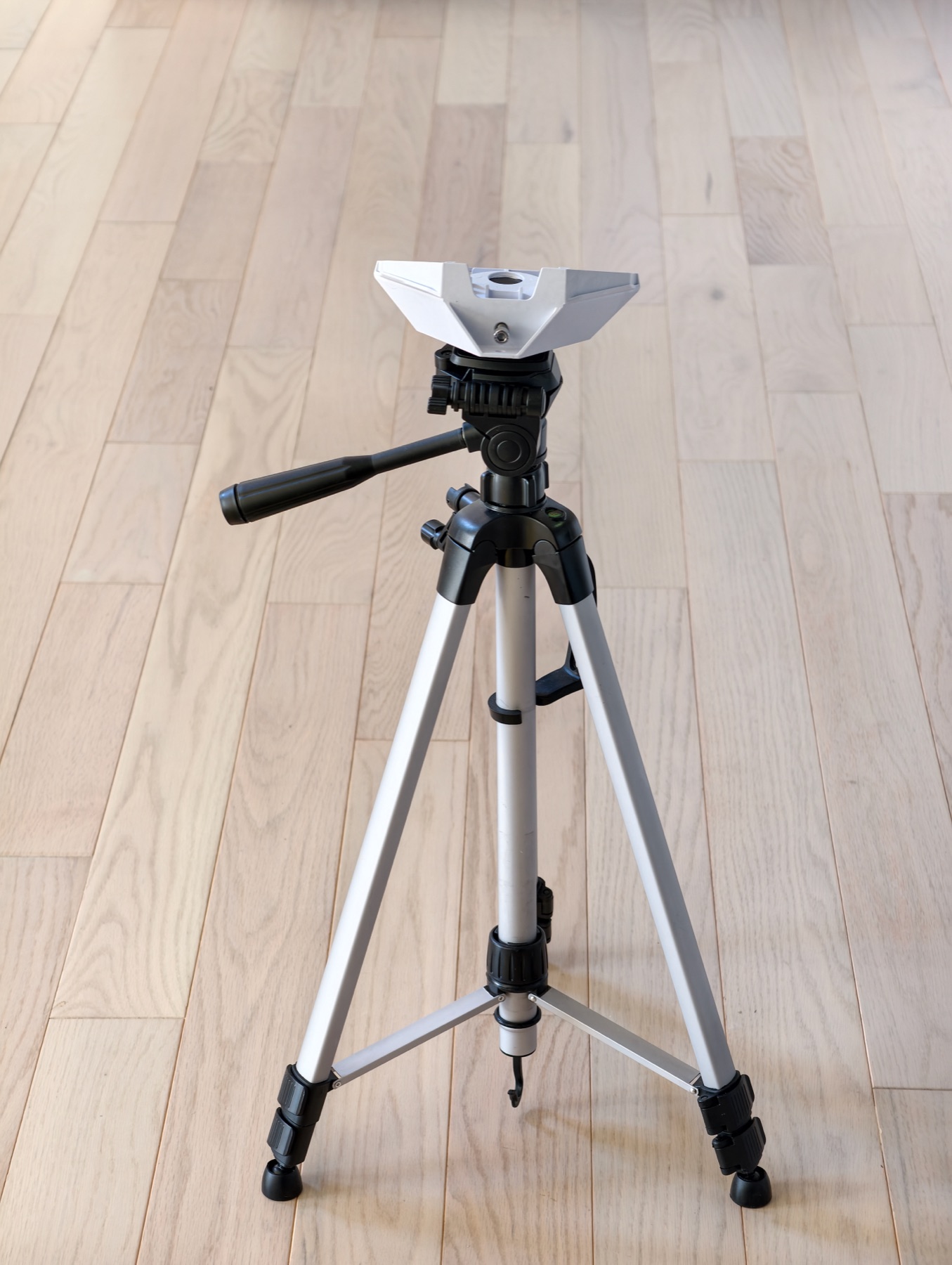
The field insight
Thread size is only half the fit. The newer Mini mount has a shallow mating face. A broad, flat quick-release plate can touch that face before its screw reaches deeply enough to lock. The included riser moves the thread outward so the plate can engage.
Why the riser is optional—and valuable
Start with the base alone. It keeps the Mini lower and removes one threaded joint. Add the included 1/4"-20 female-to-male riser only when a wide plate, clamp, or nearby control bottoms out against the shallow mount face.
This is a reach problem, not a thread-size problem. If the plate spins or stops before the joint tightens, forcing it can damage threads without improving engagement. The riser adds clearance, but also adds height and leverage, so it is a correction—not the default stack.
A thread can engage without creating a clamp
A secure camera-style joint needs two things: enough thread engagement to carry the load, and two mating faces pulled together so friction resists rotation. Simply catching a few threads is not the same as locking the assembly.
That distinction explains several failures that look identical from above:
| Geometry | What happens | Result |
|---|---|---|
| Wide plate hits the shallow mount face | Screw cannot reach far enough | No useful engagement |
| Screw enters but bottoms internally | Threads stop before faces clamp | Assembly still rotates |
| Only a few threads catch | Joint appears connected but has little engagement | Easy to strip or loosen |
| Riser clears the obstruction | Screw reaches and mating faces clamp | Corrected geometry |
Flip the base to choose the thread
The dual-sided base presents 1/4"-20 on one side and 3/8"-16 on the other. Flip the adapter to match the support; do not force one standard into the other. The included riser also uses 1/4"-20 threading.
Compatibility gate: this adapter is for the 2025/2026 Starlink Mini mount interface, not the 2024 mount. Identify the mount before checking tripod hardware.
Start with sky view, not the tripod
A beautifully mounted Mini in the wrong location is still a poor setup. Starlink says the Mini needs a clear view of the sky and recommends using the obstruction tool in the Starlink app at the intended height and perspective. ↗
Once online, use the app's alignment tool rather than guessing the dish direction. The tripod is valuable because it lets you move and realign the Mini without committing to a permanent installation. ↗
Build the support as one system
The adapter joins hardware; it does not make an undersized tripod stable. Check the support rating, plate lock, leg footprint, ground, wind, cable pull, and supervision together.
- Ground: use a firm, level area outside foot and vehicle traffic.
- Thread: choose the correct side, engage it squarely, and test the base before adding the riser.
- Cable: leave a service loop and secure the lead below the moving head.
- Sky: run obstruction and alignment checks from the final dish position.
Extra height has a cost
The riser creates clearance by moving the load farther from the plate. It also increases the moment at the joint: moment = side force × height. The same cable tug or wind load produces more turning force when the stack is taller.
That is why the riser is valuable but optional. Keep the center column low, open the legs fully, and remove the riser when the base alone can lock cleanly.
Route the cable so it cannot steer the mount
Leave a relaxed service loop at the Mini, then secure the cable below the head. A taut cable can rotate the mount or tip a light tripod as the dish is aligned, a door opens, or someone walks past.
Read the symptom as geometry
| Check | Good sign | Stop and correct |
|---|---|---|
| Sky view | App obstruction scan is suitable | Trees, roof, or poles cut across the field of view |
| Support | Wide footprint on firm, level ground | Loose locks, narrow stance, rocking, or soft soil |
| Interface | Plate locks without bottoming out | Plate touches the mount before threads engage |
| Cable | Supported service loop with no pull on the Mini | Taut lead, hanging adapter, or trip hazard |
| Alignment | App confirms the final orientation | Dish moved after the last check |
A 60-second field check
- The correct thread side is fully and squarely engaged.
- The riser is present only if the plate needs clearance.
- The head and leg locks stay fixed during a gentle wobble check.
- The cable has slack at the Mini and strain relief below the head.
- The Starlink app confirms obstruction and alignment from the final position.
Use this arrangement for supervised, stationary placement. Moving-vehicle or permanent unattended mounting requires hardware designed for that environment.
Evidence and limits
The clearance explanation comes from the production geometry and physical fit problem the riser was added to solve. Thread sizes, riser type, and the 2025/2026-only compatibility boundary are product-specific; support load capacity and wind resistance still belong to the tripod, head, clamp, ground, and complete setup. The product page lists the exact included adapter parts.
Continue planning
Choosing the power route next? Read Starlink Mini Power Cables Explained or the vehicle power guide.
Mounting note: Verify the exact Mini mount generation, support interface, load rating, included parts, and current instructions before use. A portable support may not be appropriate for high wind, vehicle motion, roofs, or unattended permanent installation. WEYLCORE is an independent accessory brand.