
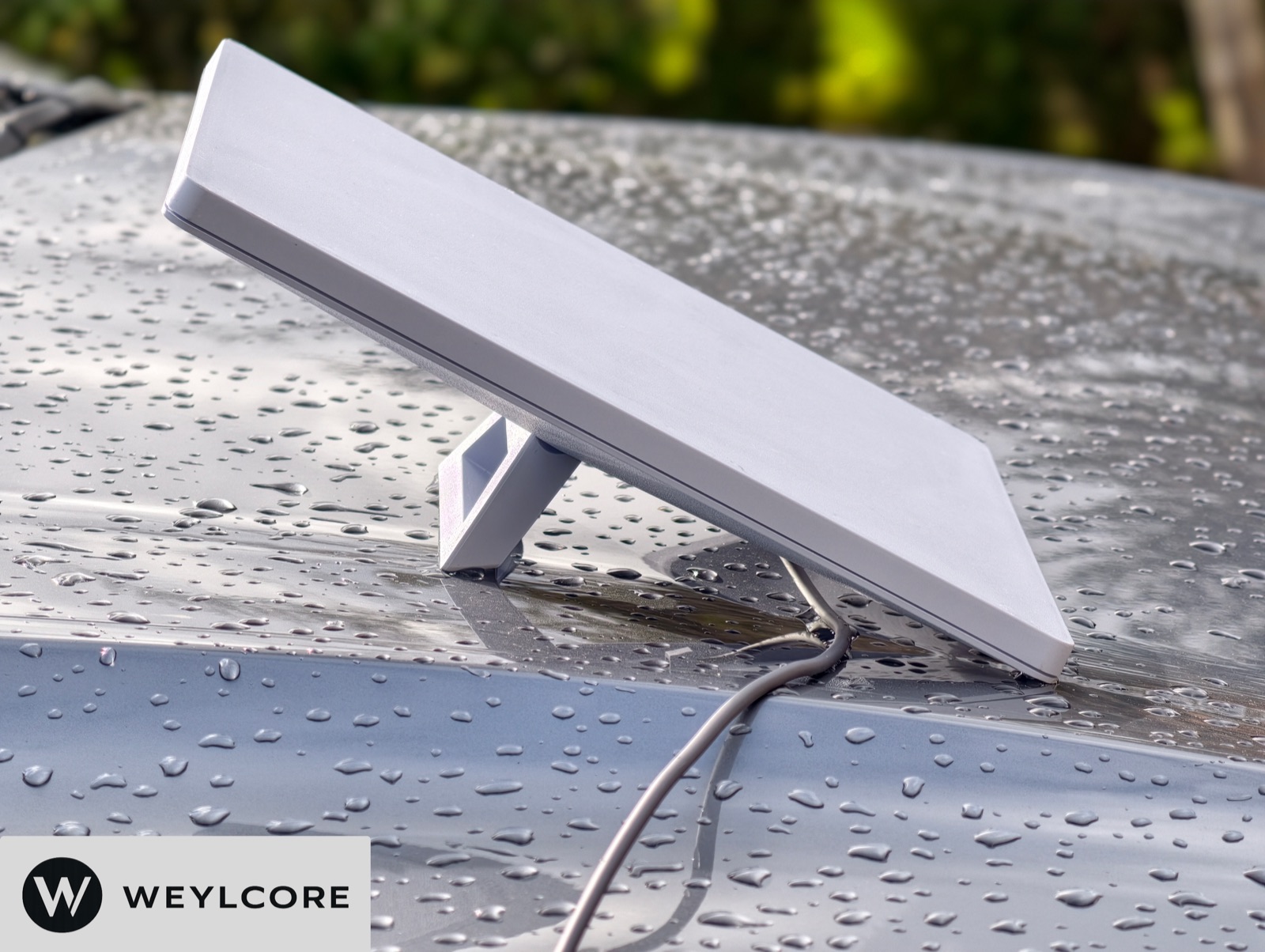
This post is really about one thing: reliable, efficient power
Most Starlink Mini users do not start with a system setup question. They start with a compatibility question.
Is it USB-C? Is it 100W? Does it match 20V/5A? Those are not bad questions. They are just incomplete.
They tell you whether a setup looks compatible on paper. They do not tell you whether the whole power path will stay stable once you add cable length, connector strain, outdoor exposure, and real setup friction.
The better question is: How do you power Starlink Mini reliably, efficiently, and without random dropouts?
A setup can satisfy the headline numbers and still be a weak real-world setup in a car, on a roof, at camp, or anywhere the power path has to deal with distance and movement.
Three design principles matter most
- Split conversion from delivery. The input adapter and the long power cable should not be asked to do the same job.
- Put the thicker wire where distance matters. Long runs are where thin cable starts giving away voltage margin.
- Protect the USB-C end and the Mini-side connection differently. Those two ends have different failure modes.
The simplest way to say it: Starlink Mini power is not just a cable choice. It is a power-path system setup task.
Specs tell you compatibility. System design tells you whether it stays stable
Yes, the official baseline matters. Starlink says Mini supports 12-48V DC input, and for the official USB-C path it calls for 100W USB-PD at 20V/5A. ↗ ↗
Starlink's own Mini accessories guide also lists both a Mini USB-C cable and a Mini Car Adapter built around that same 100W requirement. ↗
USB-C matters here because it is a real and useful Mini power option, especially for portable use, battery banks, and quick mobile setups. But it is not the only good path. Many van, RV, marine, and fixed DC users power Mini directly from a DC source, which is often the cleaner answer when portability is less important.
The real problem is that weak setups usually do not fail because someone missed a voltage number. They fail because the whole power path was not thought through as a system.
That system has four parts:
- the power source
- the input adapter or conversion stage
- the long power cable
- the Mini-side outdoor connection
If one of those is weak, the setup gets worse.
A stable setup usually looks like this
Power source -> input adapter (USB-C or DC) -> soft 16AWG long power cable -> sealed Mini-side connection -> Mini
The design decision that changes everything
A lot of products still behave as if one long generic cable is enough. I do not think that is the right architecture for a demanding Starlink Mini setup.
Our cable kit exists because the system really has two jobs:
- the input adapter has to handle negotiation, conversion, or protection
- the long power cable has to carry power with less voltage loss
Once you split the jobs correctly, the product stops looking like a random bundle and starts making engineering sense.
Why we use 16AWG, but still care about softness
Longer runs create voltage drop. Voltage drop eats stability. That is the point most users never get told clearly enough.
That is one reason we use a heavier 16AWG cable for the long power-delivery section of our design. Not because 16AWG sounds impressive, but because long-run power delivery is exactly where thin cable starts giving away margin.
I was underwhelmed to see thinner cable choices in this category. That is an engineering judgment, not a claim that every thinner cable is unusable. My point is narrower: Mini may be small, but its power path gives away margin quickly once you add length, startup load, and less-than-perfect conditions.
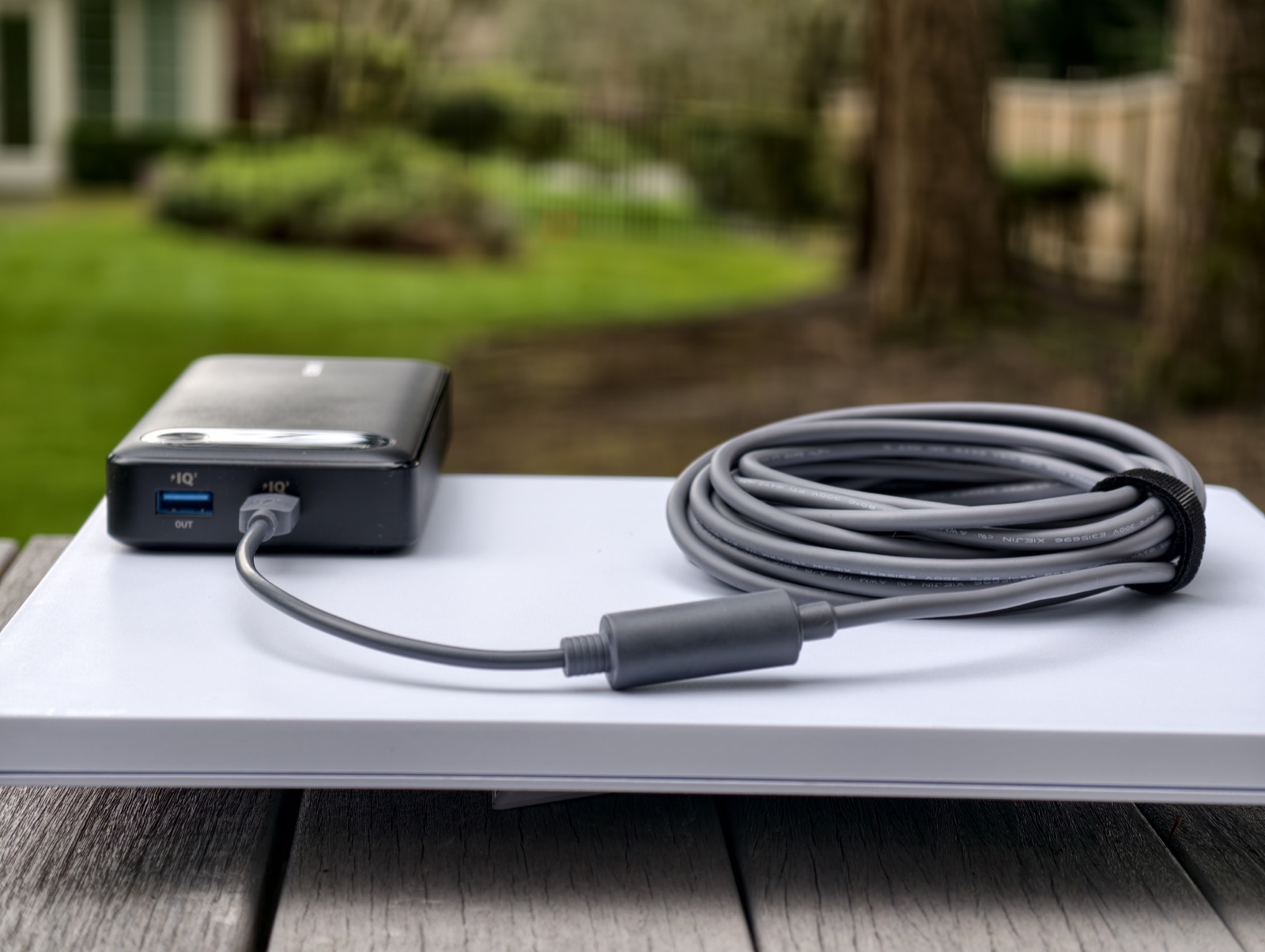
A split power path, not a replacement cable
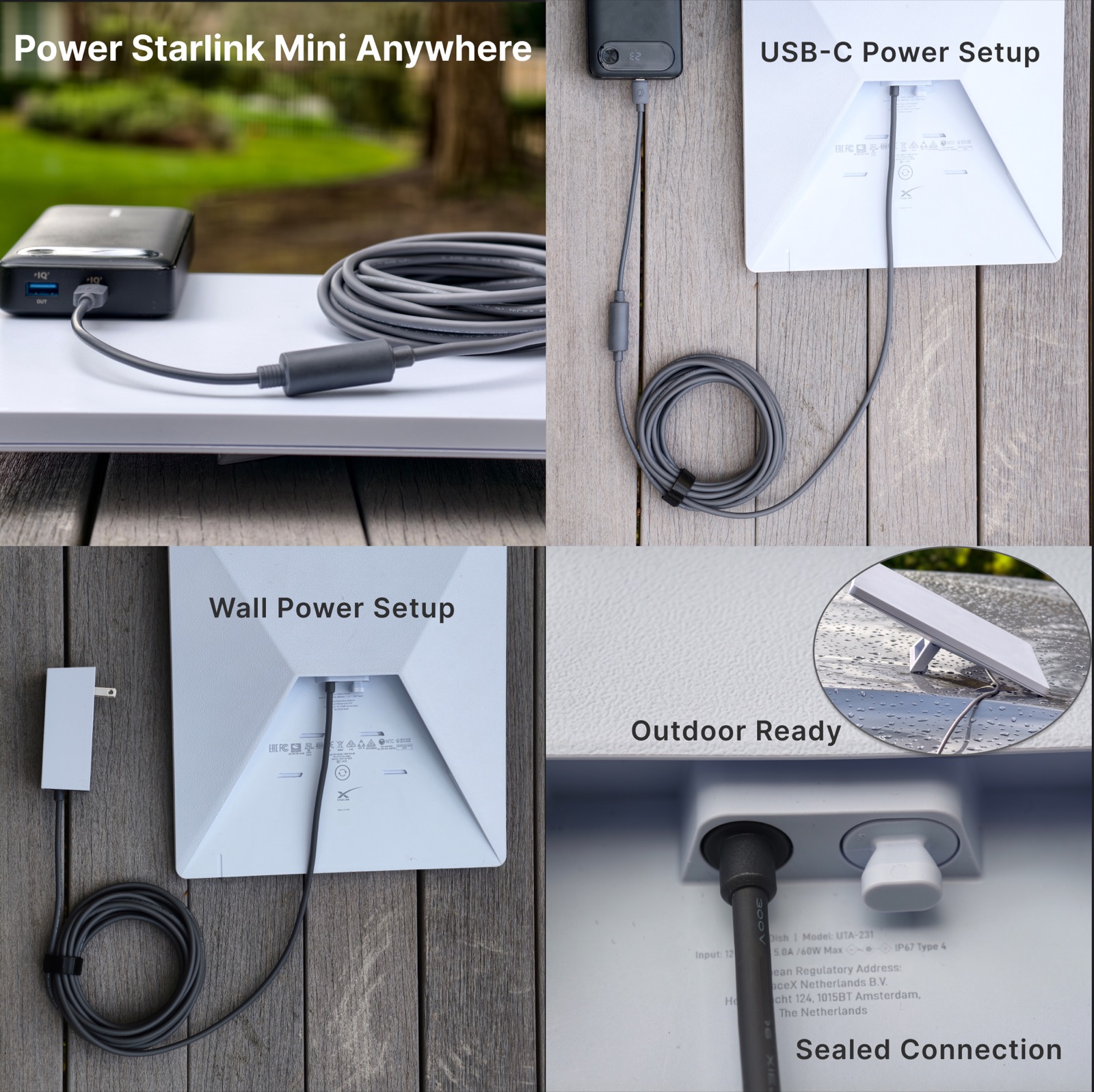
The Weylcore Starlink Mini Cable Kit on Amazon is built around three parts:
- a short USB-C PD to DC adapter section
- a 5 m 16AWG outdoor DC cable
- a weather-sealed Mini-side barrel connection
That modular split-power architecture is the point.
There is another engineering tradeoff here that gets ignored all the time.
Thicker cable is usually stiffer cable. Harder to route. Harder to coil. Harder to live with in a car, van, or outdoor setup.
So for me, 16AWG is not the whole story. The real goal is thicker where it helps electrically, while still using materials soft enough to keep the cable manageable in the hand.
Why the short USB-C side should stay short
USB-C is convenient, but it is still a compact consumer connector. It has to handle power negotiation, internal electronics, and repeated plugging and unplugging.
That does not mean USB-C is the only correct way to power Mini. It means USB-C is the path that needs the most care when people want a portable, battery-friendly, or travel-ready setup.
That complexity is not just theoretical. In USB-C cable design, the e-marker or EMCA electronics live inside the connector housing itself, and higher-power or full-featured cable designs may put those electronics in one plug or even both plugs. ↗ ↗
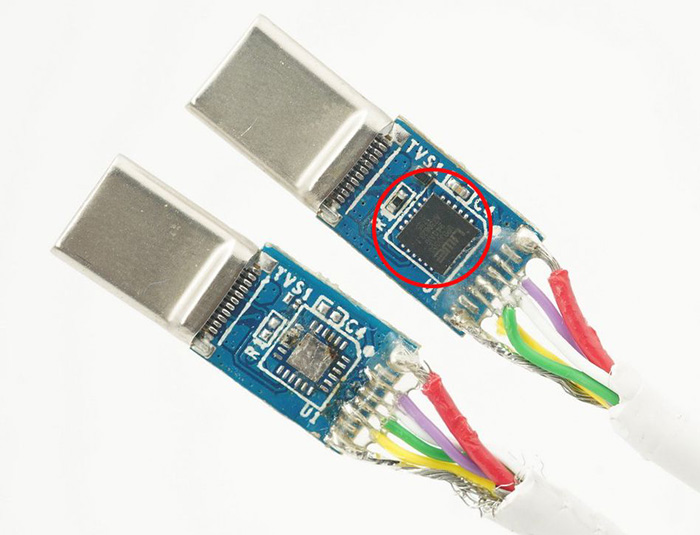
For longer power runs, thicker wire matters because it helps reduce voltage drop. But the USB-C connector is still tiny. Its housing has limited space, its internal electronics are compact, its solder points are small, and the connector itself is not the part of the system I want carrying the full mechanical burden of a long heavy cable.
The kind of thicker wire that helps over distance is exactly the kind of wire that is harder to package, terminate cleanly, and support well inside a small USB-C connector.
So if you force the long-distance job and the USB-C job into one long all-in-one cable, compromise piles up fast. The cable gets stiffer, the connector area gets bulkier, the termination becomes harder to do well, and the weak point is still the USB-C end.
That is why I prefer a short USB-C adapter section plus a heavier long power cable. Short does not mean cheap. It means keeping the compact, negotiation-heavy, easier-to-replace USB-C part short, while the longer section does the simpler job: move power farther with less loss and without putting as much physical stress on the USB-C end.
The Mini-side connection has to survive outdoors
For real Starlink Mini use, the most exposed part of the setup is not the power bank. It is the Mini-side connection.
That side deals with rain, dust, movement, setup and teardown, and vibration in vehicles or portable use. That is why I care so much about the connector design on the Mini side.
Outdoor reliability starts there, not at the spec sheet.
The safety issue most accessories do not explain
Not all USB-C adapter paths are equally protected. Reverse power flow is one of those hidden issues that sounds obscure until something fails very quickly.
I learned that the expensive way. I bought one of these chip-based solutions myself, and it died immediately when power fed back from the DC side into the USB-C side.
In plain language, the adapter was fine when used as a one-way power path to the Mini. It was not built to tolerate power trying to travel back toward the USB-C end.
That is one reason I care about reverse-feed protection in the USB-C adapter section. It is not just a nice extra. It is part of building a safer and more forgiving power path.
Users may not know to ask about that. I still think they deserve to be told.
Modular beats disposable
If the smart electronics live in the short adapter section, you do not have to replace an entire long cable every time the power source changes or the compact connector side wears out.
That is better for cost, upgrades, and general sanity.
What Starlink Mini users should actually look for
- Is the input path actually right for your use case: portable USB-C or direct DC?
- Is the long power cable thick enough to reduce voltage drop, but still soft enough to handle well?
- Is the Mini-side outdoor connection built for real use?
- Is the input adapter or conversion stage protected well enough to avoid avoidable failures?
Bottom line
A good Starlink Mini power setup should not feel like a random accessory bundle.
It should feel like a set of parts that were designed to work together on purpose, with tested compatibility and clear tradeoffs behind each choice.
Most users naturally start with a simpler set of questions:
- Does it fit?
- Does it provide enough power?
- Is the price good?
Those are real questions, even if one of them already mixes up the job of the cable and the job of the power source.
What matters more is whether the whole setup stays stable, handles distance well, protects the fragile points, and still feels good to use in the real world.
That is the bar: intentional design, validated compatibility, and a power path that still works when real life gets messy.